Id:ICR-23131
Country:China
Year Published/Registered:1956
Cultivar Type:For Tea
AGM Type:
Scientific Name:Camellia sinensis var. assamica 'Yunkang 14'
Species/Combination:C. sinensis var. assamica
Chinese Name:云抗14号
Japanese Name:
Meaning:
Synonym:
华茶51号 农业部农业司,中国农业科学院茶叶研究所. 1990. 《中国茶树优良品种集》102-103页。
GSCT51 Ministry of Agriculture and Tea Research Institute, Chinese Academy of Agricultural Sciences. 1990. Collection on the improved tea varieties in China. p.102-103.
云茶14号 陈亮等. 2024.《中国茶树品种资源志(上卷)茶树登记品种》第612-613页。
» English Description
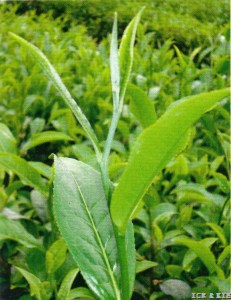
Yuncha 14 (Camellia sinensis var. assamica). Ministry of Agriculture and Tea Research Institute, Chinese Academy of Agricultural Sciences. 1990. Collection on the improved tea varieties in China. p.102-103. Chen Liang et al. 2024. Records of Tea Cultivars and Resources of Chinese Tea resources (Volume I)-Registered Tea Cultivars. p.612-613: [Applicant] Tea Research Institute of Yunnan Academy of Agricultural Sciences. [Breeder] Xu Pizhong; Chen Chunlin; Tian Yiping; Deng Shaochun; Xu Yan; Liu Yue; Pang Dandan; Chen Linbo. [Variety number] Non-major crop variety registration number: GPD Tea (2024)530039. former Yunnan crop variety validation number: Yunnan Tea No. 2, formerly known as 'Yunkang 14'. [Variety origin] Selected by Tea Research Institute of Yunnan Academy of Agricultural Sciences from Yunnan Menghai 'Nannuoshan Daye'. [Characteristics] Tree-type, large-leafed, medium-growing species. Tree posture is open, growth potential is strong, branching site is high, branching is sparse. Leaf blade upward bearing, medium oval, length 14.3 cm, width 5.5 cm, leaf color yellow-green, apex sharp in Menghai area mining period is generally in late March, a bud two leaves bloom period is generally in the middle of March; germination density is medium, velvet hairs; a bud three leaves length 7.2 cm, a bud three leaves hundred buds weight 135.3 g. The bud three leaves bloom period is in the middle of October every year, and the weight of a bud three leaves hundred buds is in the middle of October. The full bloom period is in the middle of October every year; the size of corolla is 4.5cmx3.6cm, 8 petals, white color, medium texture, velvet; the length of style is 1.5cm, the stigma is 3-lobed, the cleavage is high, and the relative heights of pistil and stamens are high; the length of pedicel is 1.2cm, the calyx is 5, green, velvety; the ability of fructification is medium. The fresh leaves of one bud and two leaves of spring tea contain 36.4% of tea polyphenols, 2.3% of amino acids, 4.5% of caffeine, and 49.8% of water leachate. Suitable for black tea and Pu Pu tea. When making black tea, the aroma is still high and sweet, and the flavor is strong. For Puerh raw tea, the aroma is clear and rich, and the flavor is mellow and sweet; for Puerh ripe tea, the aroma is sweet and old, and the flavor is sweet and thick. The first growth cycle mu yield of fresh leaves of one bud and two leaves 777 kilograms, an increase of 21% over the control 'Daheicha'; the second growth cycle mu yield of 792 kilograms, an increase of 19% over the control 'Daheicha'. It is resistant to anthracnose, cloudy leaf blight, moderate resistance to tea cake disease, moderate resistance to small green leafhopper, resistance to coffee small clawed mite, high resistance to thrips, and strong cold and drought resistance. [Suitable for planting area and cultivation technology] Suitable for planting in the rainy season in Xishuangbanna, Pu'er and Baoshan tea areas in the southwest ecological region of Yunnan. It is advisable to plant double rows of single plants or single rows of single plants, planting 1500-2000 plants per mu; strict 4 times stereotypes pruning; strengthen the tea garden fertilization management. The survival rate of cuttings is low, cuttings should choose annual green hard branches, cuttings with naphthalene acetic acid, indole butyric acid, rooting powder and other root dipping treatment in order to improve the survival rate of cuttings.
» Chinese Description
云茶14号 (Camellia sinensis var. assamica ‘Yuncha 14’). 农业部农业司,中国农业科学院茶叶研究所. 1990. 《中国茶树优良品种集》102-103页。杨亚军,梁月荣. 2014. 《中国无性系茶树品种志》41页。陈亮等. 2024.《中国茶树品种资源志(上卷)茶树登记品种》第612-613页:【申请者】云南省农业科学院茶叶研究所。【育种者】徐丕忠;陈春林;田易萍;邓少春;许燕;刘悦;庞丹丹;陈林波。【品种编号】非主要农作物品种登记号:GPD茶树(2024)530039。原云南省农作物品种审定编号:滇茶2号,原名‘云抗14号’。【品种来源】云南省农业科学院茶叶研究所从云南勐海‘南糯山大叶种’中单株选育而成。【特征特性】乔木型,大叶类,中生种。树姿开张,生长势强,分枝部位高,分枝稀。叶片向上着生,中等椭圆形,长14.3厘米,宽5.5厘米,叶色黄绿,先端尖锐。在勐海地区开采期一般为3月下旬,一芽二叶盛期一般在3月中旬;发芽密度中等,茸毛多;一芽三叶长7.2厘米,一芽三叶百芽重135.3克。盛花期为每年10月中旬;花冠大小为4.5厘米x3.6厘米,花瓣8枚、色泽白色、质地中、有茸毛;花柱长度1.5厘米,柱头3裂、裂位高,雌蕊和雄蕊相对高度为高;花梗长度1.2厘米,花萼5个、绿色、有茸毛;结实能力中等。春茶一芽二叶鲜叶含茶多酚36.4%,氨基酸2.3%,咖啡碱4.5%,水浸出物49.8%。适制红茶和普搏茶。制工夫红茶,香气尚高甜,滋味较浓强。制普洱生茶,香气清香浓郁,滋味醇厚回甘;制普洱熟茶,香气较甜陈,滋味甘醇、较厚。第一生长周期亩产一芽二叶鲜叶777千克,比对照‘大黑茶’增产21%;第二生长周期亩产792千克,比对照‘大黑茶’增产19%。抗炭疽病、云纹叶枯病,中抗茶饼病,中抗小绿叶蝉,抗咖啡小爪螨,高抗蓟马,耐寒性和耐旱性强。【适宜种植区域及栽培技术要点】适宜在西南生态区域云南西双版纳、普洱、保山茶区雨季种植。宜双行单株或单行单株种植,每亩栽1500-2000株;严格4次定型修剪;加强茶园培肥管理。扦插成活率较低,扦插枝条宜选用一年生绿色硬枝,扦插前用萘乙酸、吲哚丁酸、生根粉剂等进行蘸根处理以提高扦插成活率。
Flower Form:
Flower Colour:
Flower Size:
Blooming Season: China
Flower Fragrance:
Recommend Links: Yunkang 10、Yunkang 27、Yunkang 37、Yunkang 43、Apollo 14、Xianglin 14、Taicha 14、Yunyoucha 14、Minzayou 14、Yuyoucha 14